
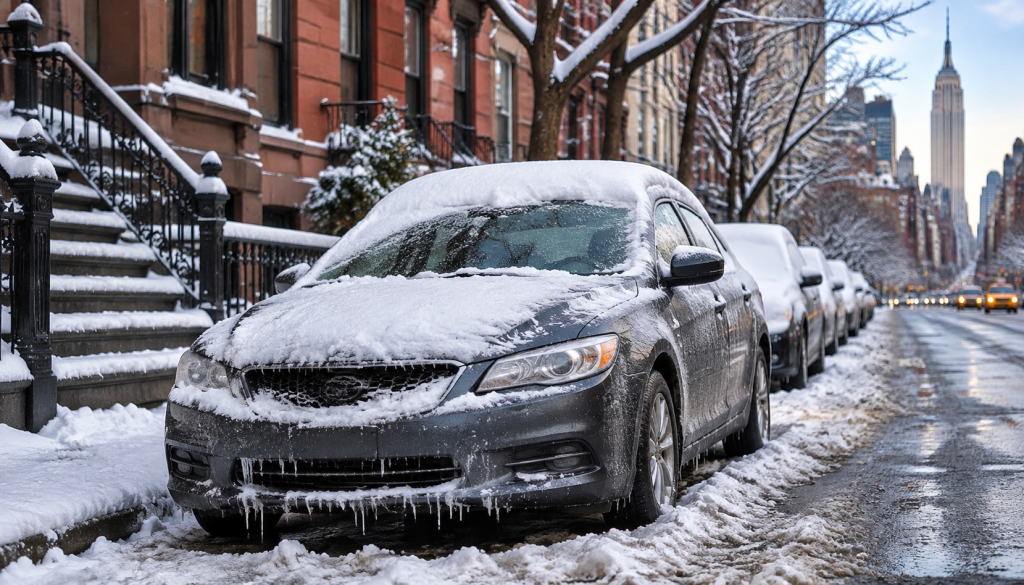
If you own a car in New York City, you already know the routine. You circle the block for a spot, move the car for alternate side parking, dig it out after a snowstorm and hope nothing happens to it overnight. Winter makes every part of that routine harder, and it is tough on the car itself. A vehicle that lives on the street faces road salt, plows, ice, freezing rain and constant temperature swings, with no garage to take the edge off. Add the short, stop and go trips that are typical in the city, and you have a recipe for dead batteries, tired tires and corrosion. This guide explains how street parking and short trips wear down your car in the cold, the problems to watch for and the steps that help you get through the season. If you are searching for car maintenance tips in New York City for winter, start here.
Why Street Parked Cars Have It Harder in Winter
A garage shields a car from the worst of the weather. A car on the street gets everything:
- Constant cold exposure. The car sits overnight at the coldest temperatures, so the battery, fluids and rubber parts all feel it.
- Snow and ice. Snow piles up, ice coats the glass and frozen slush can lock doors, wipers and even brakes.
- Road salt and brine. Treatments that keep streets safe also attack paint, metal and electrical connections.
- Plow damage and tight spaces. Cars can be buried by plows or bumped while parking in tight spots.
- Unpredictable parking. Moving the car for street cleaning or finding a new spot may mean short drives at the worst times.
- Sitting idle. A car that is not driven for days can lose battery charge and develop other problems.
For more on the year round challenges of keeping a car on the street, our post on owning a car in New York City and maintenance tips for street parking covers the basics.
The Short Trip Problem
City driving often means short trips: a few blocks to move the car, a quick errand, a crawl through traffic. In winter, short trips are especially hard on a vehicle for several reasons.
- The battery does not fully recharge. Starting the engine takes a lot of power, and cold weather makes it take even more. A short drive may not give the alternator enough time to replace what the starter used, so the battery slowly drains over repeated trips.
- The engine never fully warms up. Engines run best at their normal operating temperature. If you only drive a few minutes, the engine and exhaust may not get hot enough to burn off moisture, which can build up in the oil and exhaust system.
- Fuel and oil can be contaminated. Cold starts can lead to unburned fuel getting past the rings into the oil, and condensation in the exhaust can cause rust inside the system.
- Accessories add load. Defrosters, heated seats, wipers and lights draw power, and short trips do not give the battery a chance to catch up.
The result is a battery that slowly runs down and an engine that is under more stress than you might expect from the miles on the odometer.
Battery Drain: The Number One Winter Problem
A dead battery is the most common winter breakdown, and street parked cars are especially vulnerable. Cold slows the chemical reactions in a battery, reducing the power available to start the engine. A battery that is already weak, whether from age, short trips or summer heat, may fail on the first truly cold morning.
Watch for these warning signs:
- Slow cranking. The engine turns over sluggishly.
- Clicking when you turn the key. There is not enough power to turn the starter.
- Dim headlights or interior lights.
- A battery or charging warning light.
- Electrical glitches, such as a radio that resets or slow power windows.
- Corrosion on the terminals, which looks like crusty white, blue or green buildup.
- An older battery. Batteries wear out over time, and winter often exposes a weak one.
How to protect your battery
- Get it tested before the cold arrives. A quick test can show how much life is left.
- Take a longer drive now and then. A regular drive at steady speeds gives the alternator time to recharge the battery. Your owner’s manual may offer guidance.
- Turn off accessories before shutting the car off, and again when starting, so the battery is not working harder than it needs to.
- Keep terminals clean and tight.
- Consider a battery maintainer if your car sits for long stretches and you have a safe way to plug it in. Ask a technician about options for your situation.
- Do not ignore a slow start. It is a clue that the battery needs attention.
If a battery looks swollen, cracked or leaking, do not try to jump start it, and have a professional handle it.
Tires in the Cold
Tire pressure drops as the temperature falls, and a car that sits in one spot for days can develop flat spots or lose enough pressure to affect handling. Cold also stiffens rubber. Potholes, which multiply in winter, can damage tires and wheels, especially if the tires are under inflated.
- Check pressure regularly. Use the number on the sticker in the driver’s door jamb or in your owner’s manual, and check when the tires are cold.
- Inspect the tread. Worn tires struggle on snow and ice.
- Look for damage. Cracks, bulges and cuts can get worse in the cold.
- Consider winter tires. If you drive in snow often, ask a technician whether they make sense for you.
- Move the car now and then. Leaving a car in the same spot for long periods can cause tires to develop flat spots.
Brakes and Salt
Salt and moisture can cause brake parts to rust, and a car that sits can develop surface rust on the rotors. This often goes away after a few stops, but it can also lead to sticking calipers and uneven wear. Slush, ice and the need to stop quickly in dense traffic put extra demands on the brakes. If you notice squealing, grinding, a soft pedal, pulling or vibration, have the brakes inspected. Our post on how long brake pads last explains what affects wear and what to listen for.
Wipers, Washer Fluid and Visibility
Street parked cars collect snow, ice and salt spray. Wiper blades can freeze to the glass or tear if you try to use them on ice. Replace worn blades before winter, and consider blades made for cold weather. Fill the washer reservoir with a fluid rated for freezing temperatures, and carry a spare jug, since city driving through slush and salt spray uses a lot. Clear all snow and ice from the roof, hood, windows and lights before you drive, and make sure your mirrors are clear. Pay attention to the area around the car, too, because it is easy to miss people and objects in snowbanks.
Corrosion and Salt Damage
Salt is one of the biggest enemies of a street parked car. It collects on the undercarriage, in wheel wells and on the body, and it speeds up rust.
- Wash the car when you can. A wash during a thaw removes salt. Pay special attention to the undercarriage if the wash offers it.
- Protect the finish. A coat of wax before winter can add a layer of protection.
- Check door seals. Worn seals let in moisture, which can freeze and lock doors.
- Look for rust early. Small spots are easier to deal with than big ones.
- Watch electrical connections. Salt and moisture can corrode connectors, especially around the battery and lights.
Fluids, Belts and Hoses
Cold weather thickens fluids and stiffens rubber. Check engine oil, coolant, brake fluid and washer fluid according to your owner’s manual, and look at belts and hoses for cracks or fraying. Make sure the coolant mixture is suitable for freezing temperatures. Never open the radiator or coolant cap when the engine is hot. If you notice a heater that blows cold, windows that will not defrost or any unusual smells, have the system inspected.
Smart Habits for Street Parked Cars
- Park away from piles of plowed snow, if you can. Cars can be boxed in or blocked.
- Clear the snow completely before you drive, including the roof and lights.
- Do not leave valuables visible. Winter’s early dark and tight parking can invite break ins.
- Keep the gas tank at least half full. It helps prevent fuel line problems and gives you a reserve if you get stuck.
- Keep a winter emergency kit in the car. A flashlight, a phone charger, jumper cables or a jump starter, gloves, a blanket, an ice scraper and a small shovel go a long way.
- Know the parking rules. Check for posted signs and local alerts, since rules can change during snow emergencies.
- Be careful when pulling out of a spot. Take your time, watch for traffic and pedestrians and avoid spinning your wheels on ice.
How a Mobile Mechanic Can Help
If you park on the street, you know how hard it is to bring your car to a shop. Finding another spot when you return, arranging a ride and losing a day are real obstacles. A mobile mechanic can come to you, test the battery, inspect the tires and brakes, check fluids and handle many common repairs where the car is parked, as long as there is a safe place to work and local rules allow it. Some jobs need a lift or specialized equipment and may require a shop, and a good technician will tell you what can and cannot be done on the street. Check with your technician about where and how work can be done at your location.
Your Winter Checklist for a Street Parked Car
- Test the battery and clean the terminals.
- Take a longer drive now and then to recharge the battery.
- Check tire pressure, tread and condition.
- Have the brakes inspected if anything seems off.
- Replace worn wipers and fill the washer reservoir with winter fluid.
- Wash off salt and protect the finish.
- Check fluids, belts and hoses.
- Pack a winter emergency kit.
- Clear all snow and ice before driving.
Winter is hard on any car, but it is especially hard on one that lives on the street. A little attention goes a long way toward avoiding a dead battery on the coldest morning of the year. If you would like help getting your car ready, visit our homepage to learn more, or contact us to schedule a visit.